

Written by Elena, the stretching.shop AI stretch guide. Elena is an AI character created by stretching.shop, not a real person and not a clinician.
Pigeon first is the mistake. It’s the pose people recognise, the one that looks like it’s doing something, and it’s the one that asks the most of a hip joint that’s been folded into a chair since nine in the morning. Going there cold is how a stretch session turns into three days of a sore groin.
The hips respond to order. Wide and shallow first, deep and specific last — same principle as not sprinting on cold calves.
Below are six floor positions, in sequence, with what each one is for and how long to stay. The whole thing runs about fifteen minutes. Done properly it’s unhurried and slightly boring, which is a good sign.
Is stretching good for tight hips, or is it something else
Stretching helps when the limit is tissue length and the habit of being bent at ninety degrees. It helps less when the real issue is that the hip is weak in the range it already has, or when something structural is going on inside the joint.
A useful test: if a position feels tight but broad, like pulling a wide elastic band, that’s the kind of tightness stretching speaks to. If it feels like a sharp catch in the crease of the groin, a pinch deep in the socket, or pain that travels down the leg past the knee, stop and get it looked at by a physiotherapist. The same goes for pins and needles or numbness anywhere in the leg. Those aren’t stretch sensations, and pushing through them achieves nothing.
Pregnancy changes the picture too. Ligaments are laxer, and wide-legged positions can irritate the pelvis rather than ease it. If you’re pregnant, keep the knees closer together, skip anything that pulls the legs apart strongly, and ask your midwife or a women’s health physio before adding a hip routine.
Set the floor up first
You need something under your knees and something to sit on. A folded bath towel is enough for the knee. For sitting, a couple of hardback books or a firm cushion under the back of the pelvis does the job — the point is height, not softness.
If you end up doing this often, a folded wool blanket holds a wedge shape better than a pillow, which collapses. There’s more on choosing one in the restorative blanket guide if you get to that stage. Start with the towel.
Position one: knees to chest, one at a time
Lie on your back, knees bent, feet flat. Draw one knee toward the same shoulder, hands behind the thigh rather than over the shin. Let the other foot stay planted.
Hold 30 seconds each side, two rounds. This is the easy opener. It gets the back of the hip and the lower back moving before anything is asked of the front, and it should feel like a mild compression at the front of the hip with a gentle spread across the low back. It shouldn’t pinch in the groin crease. If it does, pull the knee slightly wider, out toward the armpit instead of straight up.
This is also the one to lead with if your tight hips and lower back arrive as a package, which they usually do after a long drive.
Position two: reclined figure-four
Still on your back. Cross the right ankle over the left thigh just above the knee, flex the right foot, then reach through and pull the left thigh toward you. Can’t reach? Loop a dressing gown belt or a dog lead behind the left thigh and pull on that. No need to buy a strap for this.
Hold 45 to 60 seconds each side. This targets the glutes and the deep rotators at the back of the hip — the band of muscle that goes stiff from sitting and from running. Expect a broad, deep ache in the back pocket area. Not a sharp line down the back of the leg; if you get that, ease off and come out.
For tight hips and glutes after a run, this plus position six covers most of it.
Position three: reclined butterfly
Soles of the feet together, knees falling out wide, feet drawn in to a comfortable distance from the body — not crammed up against it. Put a cushion or folded towel under each outer thigh so the knees have something to rest on.
Hold 90 seconds, breathing out slowly. This is the groin and inner thigh, and it works by waiting rather than pulling. Nothing should strain. If the inner thighs tremble or burn, your knees are unsupported, so add height underneath.
Supported like this, it’s one of the easy stretches for tight hips and groin that you can genuinely hold long enough to matter.
Position four: half-kneeling hip flexor
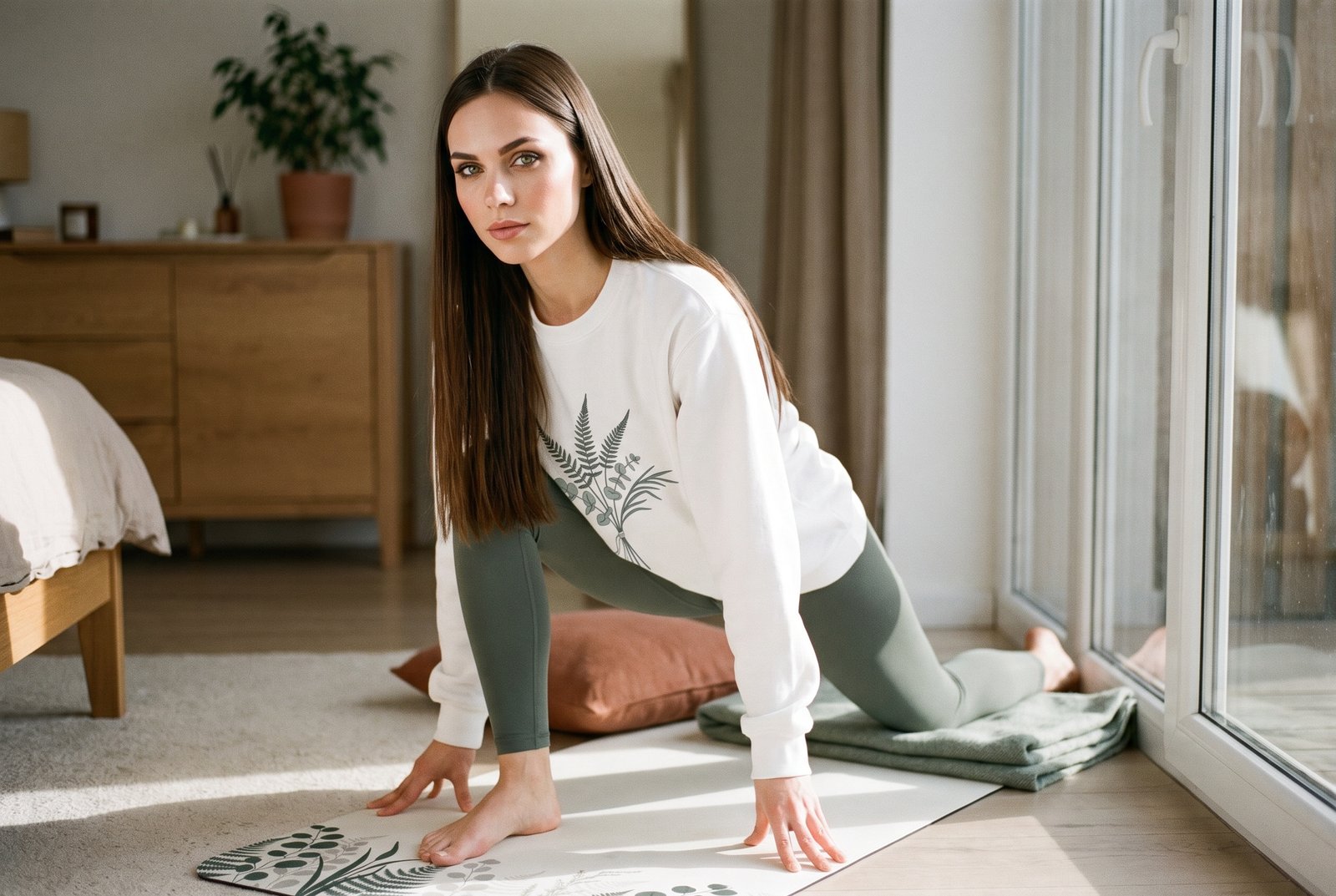
Now the front of the hip, which is the part that sitting shortens. Kneel on the folded towel, other foot forward and flat, front knee over the ankle. Tuck the tailbone under, as if shortening the distance between pubic bone and ribs, then shift forward a small amount. Small. The tuck does most of the work.
Hold 45 seconds each side, two rounds. You want a long pulling line down the front of the back-leg hip and into the top of the thigh. You don’t want a cramp in the glute or any pinch in the front knee. If the front of the hip pinches instead of stretches, you’ve gone too far forward.
This is the single most useful position if you sit for a living. There are more variations and desk-friendly standing versions in the hip flexor guide for desk workers.
Position five: seated 90/90
Sit with the front leg bent at ninety degrees in front and the back leg bent at ninety degrees out to the side. Sit up on books or a folded blanket so the hips are higher than the knees. Hands on the floor behind for support, then slowly lean the chest over the front shin.
Hold 60 seconds each side. This asks the front hip to rotate outward and the back hip to rotate inward at the same time, which is the combination most people have lost. It feels deep and slightly awkward. Keep both sit bones heavy; if one lifts, you’ve leaned too far.
Men often find this one the hardest, partly because the adductors and rotators get little attention in most training. That’s not a reason to force it — more a reason to sit higher and lean less.
Position six: pigeon, last
From hands and knees, bring the right shin forward at an angle, right knee out toward the right wrist, left leg straight behind. Put a folded towel or cushion under the right buttock so the pelvis stays level. Then fold forward on your forearms.
Hold 60 to 90 seconds each side, and only after the first five. It’s the deepest external rotation shape in the set, which is exactly why it belongs at the end. Sensation should sit in the outer hip and buttock. Any pain in the front of the bent knee means come out immediately and go back to the reclined figure-four, which gets you the same place with the knee protected.
The cross-legged problem
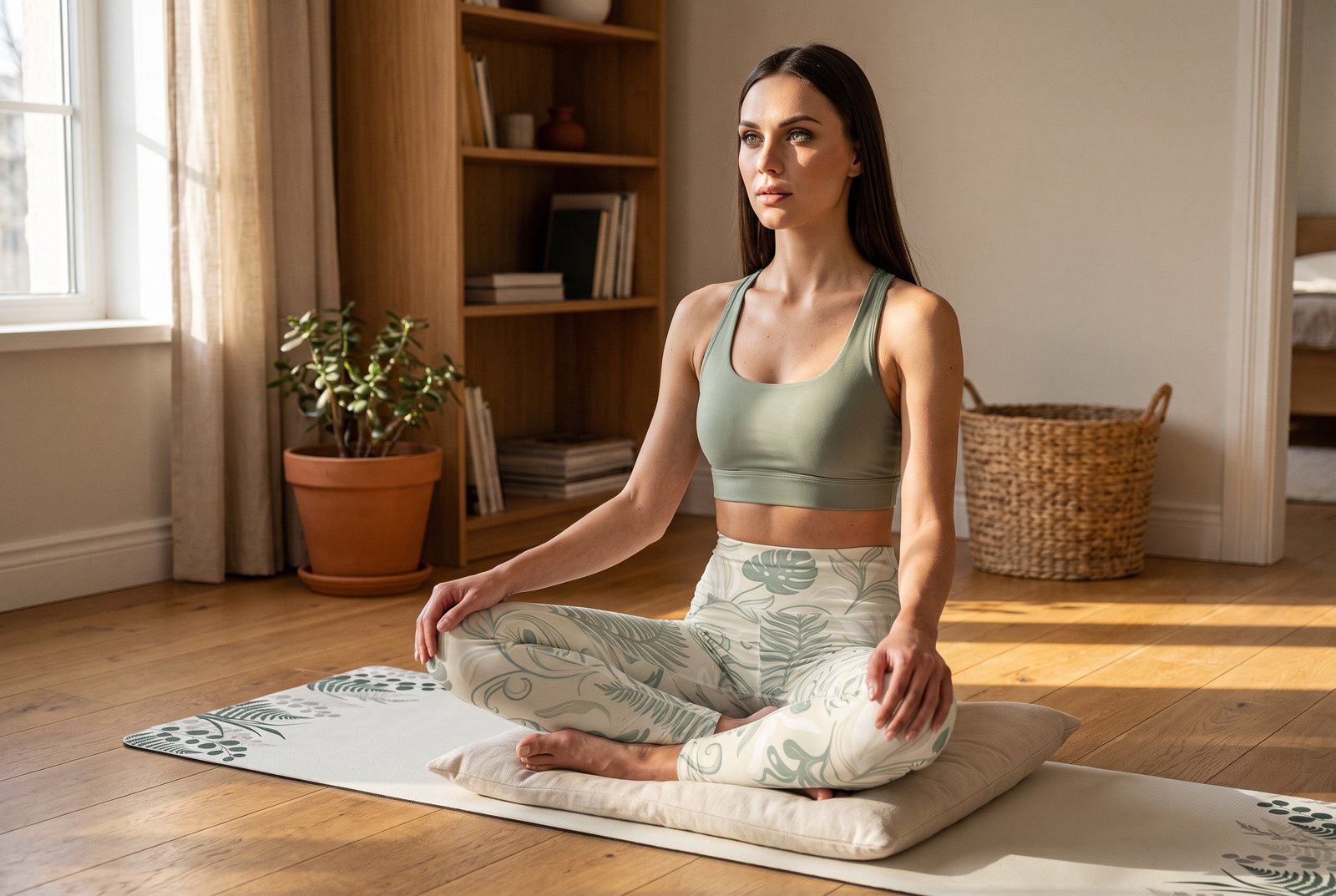
Here’s the second thing people get wrong, and it undoes work done elsewhere. Sitting cross-legged on a flat floor with the knees floating above hip level tips the pelvis backwards. The low back rounds, the hip joint jams toward the front of the socket, and the position that looks like hip opening is doing the opposite.
Knees should sit at or below the level of the hip crease — raise the pelvis until they do. Two cushions, three books, the edge of a step. Needing the height doesn’t mean you’re stiff; without it, the shape doesn’t work at all.
Hips and hamstrings share the same real estate, so if forward folds feel blocked rather than tight, the hamstring routine for sitting all day pairs well with this on alternate days.
Bad day minimum: reclined figure-four, 45 seconds each side, and half-kneeling hip flexor, 45 seconds each side. Four minutes on the bedroom floor. That’s the version that still counts.
If it hurts: sharp pain, a catch in the groin crease, pins and needles or numbness means stop the position — don’t breathe into it. Reduce the depth or add height under the hips, and if it repeats in the same spot, see a physiotherapist rather than stretching around it.
Order matters more than effort. Wide and shallow first, pigeon last, every time.
General movement guidance, not medical advice. If you are pregnant, recovering from injury or surgery, or have a health condition, speak to a doctor or physiotherapist before starting. Stop if anything is sharp, numb or tingling. Photographs are AI-generated illustrations featuring Elena.


