

Written by Elena, the stretching.shop AI stretch guide. Elena is an AI character created by stretching.shop, not a real person and not a clinician.
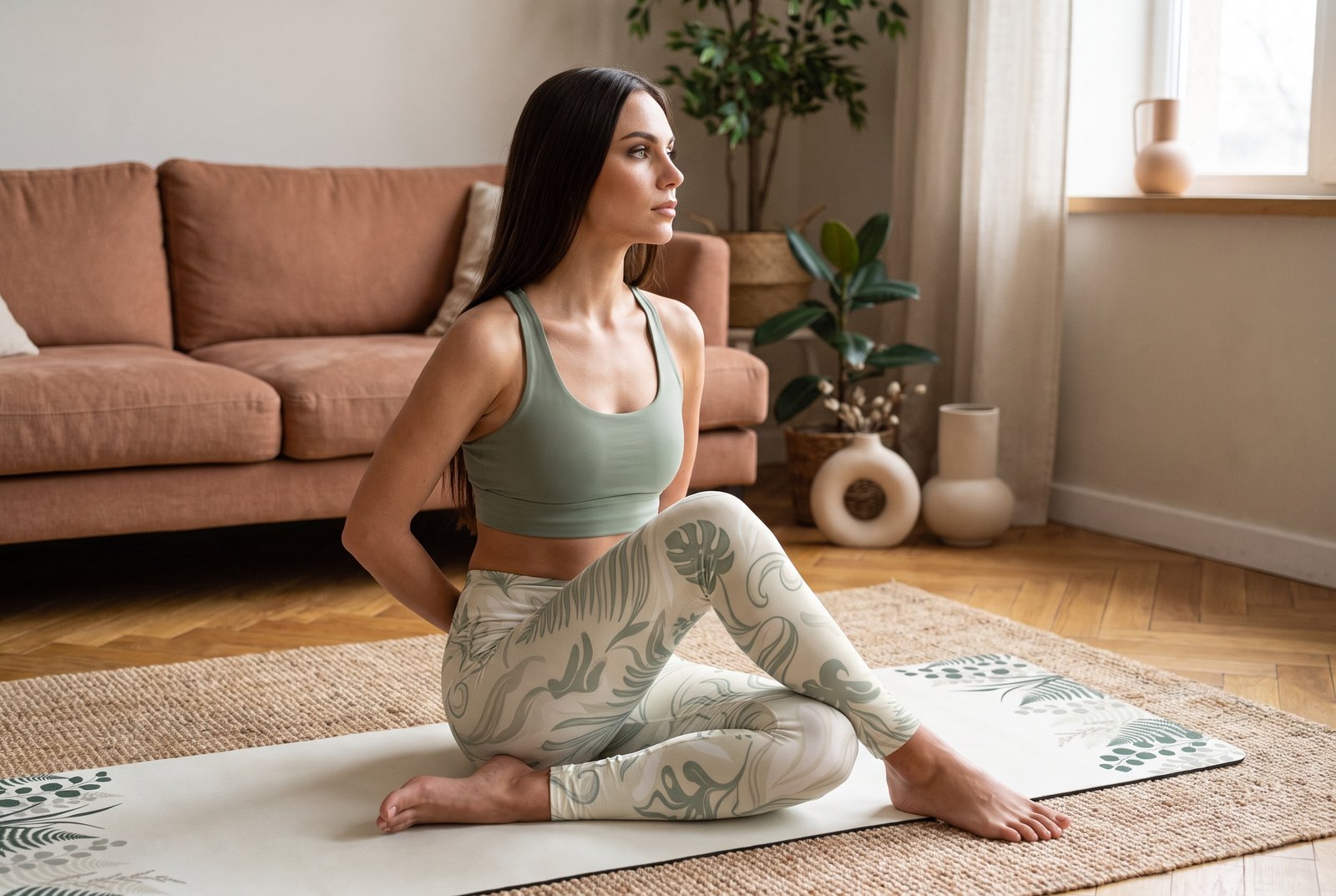
Most people rounding forward in a seated figure-four are reaching with the wrong part of the body. The chest drops, the lower back curves, the head gets closer to the shin — and the glute, the thing this was supposed to be about, barely registers it. The hip never opened. The spine just folded.
That one habit is why so many people decide glute stretches don’t work on them.
The fix is unglamorous. Sit tall, keep the chest where it is, and tip from the hip crease instead, hinging the whole torso as a unit, like a plank tilting forward. The stretch lives in the hip, not in how far your nose travels. Below are five positions, from a chair to the floor to standing in shoes, and what each one is actually for.
Can you stretch your glutes, and what are you reaching?
Yes, and more easily than most muscle groups — they respond to position rather than force. The glutes are three layers: a large superficial one across the back of the hip, two smaller ones underneath toward the side, plus a set of small deep rotators including the piriformis sitting beneath all of it.
Crossing one ankle over the opposite knee rotates the thigh outward and draws the hip away from the ribs at the same time. That combination is what reaches the deep layer. Nearly every good glute stretch is some version of that shape — on a chair, on your back, on the floor, or balanced against a wall.
What it should feel like: a broad, dull, slightly uncomfortable spread in the back of the hip or the meat of the buttock. What it should not feel like: anything sharp, anything electric, anything travelling down the back of the leg, pins and needles, or numbness in the foot. Those mean stop and come out, not breathe through it.
The five positions
1. Seated figure-four — the one you can do at a desk
Sit forward on the chair, feet flat. Cross the right ankle over the left thigh, just above the knee, and let the right knee drop out to the side. Lengthen through the crown of the head, then hinge forward from the hips until you feel it. Hold 45 seconds each side, two rounds.
What it’s for: the deep rotators and the outer glute, the ones that stiffen under hours of sitting. If the knee stays high and nothing registers, stop hinging and press gently down on that thigh instead. Front-of-hip pinching means you’ve gone past the available range — back off an inch.
2. Lying figure-four — more control, less back involvement
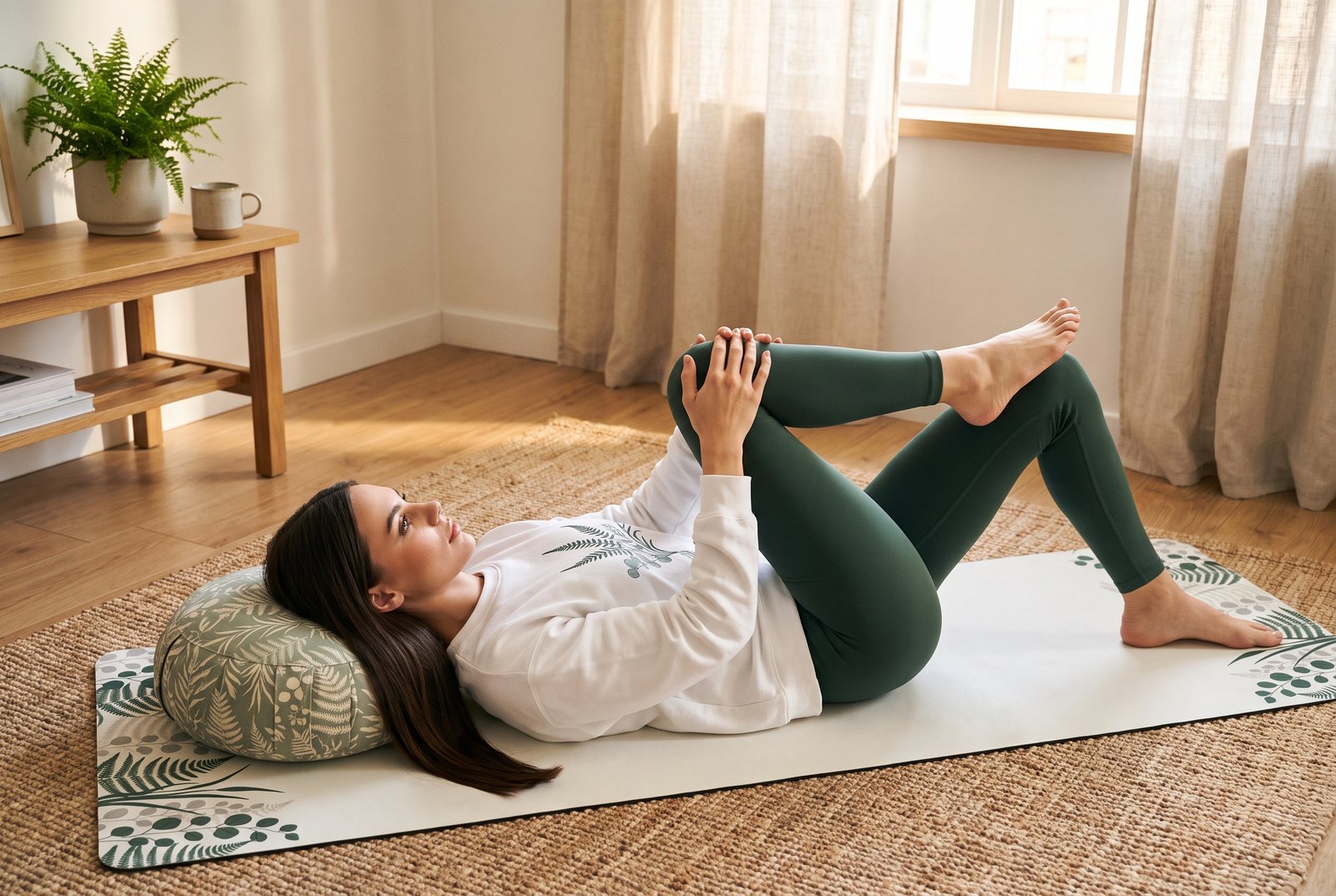
On your back, knees bent, feet on the floor. Cross the right ankle over the left thigh, thread your hands behind the left thigh and draw that leg toward your chest. The floor supports your spine, so the hip has nowhere to hide. Hold 60 seconds a side.
This is the best version if your lower back complains in the seated one. Keep the head and shoulders down; lifting them to meet your knee is the same rounding mistake in a different outfit. If you can’t reach behind the thigh comfortably, loop a belt, dressing gown cord or towel around it and pull on that.
3. A slow pigeon shape — the deepest, and the easiest to overdo
From hands and knees, bring the right knee forward behind the right wrist and slide the left leg back. The right shin sits at a diagonal, not parallel to the front of the mat. Prop a folded towel or cushion under the right hip so the pelvis stays level, then stay upright on your hands before lowering to forearms. Hold 60 to 90 seconds, breathing slowly.
What it’s for: a long, sustained reach into the whole back of the hip that the figure-fours only touch. Any pain at or around the front knee means come out immediately — the shin angle or the hip support is wrong, not your flexibility. A thin mat makes this version harsh on the kneecap. A folded blanket under the knee solves it for free, and if you’re choosing a mat anyway, thickness matters more for kneeling shapes than for anything else.
4. Supine twist — glute, side hip and lower back together
Lie on your back, draw the right knee toward your chest, then guide it across the body to the left with your left hand. Keep both shoulders on the floor. Turn your head right if the neck likes it. Hold 45 to 60 seconds, then switch.
This one catches the outer glute and the band of tissue down the side of the thigh. It should feel like a wide, pleasant unwinding. If the right shoulder peels off the floor, let the knee stay higher — the shoulder staying down is what makes the twist happen in the hip.
5. Standing figure-four — shoes on, no floor needed
Stand with a hand on a wall, chair back or desk. Cross the right ankle over the left thigh and sit back into a shallow single-leg squat, hips moving backward as if to perch on a stool. Hold 30 seconds a side.
What it’s for: airports, kitchens, the five minutes before a meeting. It doubles as a balance and control drill, which the lying versions don’t. Keep the standing knee tracking over the middle of the foot rather than collapsing inward.
Glute stretches for lower back pain — what they can and can’t do
A stiff hip changes how the pelvis sits, and the lower back often ends up doing the movement the hip declined to do. That’s why these positions frequently feel good across the low back even though nothing in the back is being stretched. They’re worth doing for that reason.
They are not a treatment. Pain shooting below the knee, numbness, weakness in the foot, loss of bladder control or numbness around the groin needs a physiotherapist or doctor, not a stretch. Same for back pain after a fall or pain that wakes you at night. Working the front of the hip often helps too — the hip flexors are the other half of the chair problem.
Stretches to build glutes, and why that phrase is a trap
Stretching doesn’t build muscle. What people usually mean by glute activation is waking up a muscle that has gone quiet, and that’s a short set of contractions rather than holds.
Try ten slow glute bridges before your stretches: feet flat, hips to the ceiling, squeeze at the top for three seconds, lower. Then ten clamshells on each side, lying on your side with knees bent, lifting the top knee without rolling the pelvis backward. Stretch to get range, then contract to own it. Building actual size takes loaded work: squats, hinges, step-ups. That’s training, not stretching.
Glute stretches in bed, and a gentler version for older bodies
A firm mattress works for the lying figure-four and the supine twist. A soft one will swallow the pelvis and the hip won’t move much, so the floor with a folded blanket is better if you can get down and up safely.
If kneeling is off the table, skip pigeon entirely. The seated figure-four in a dining chair with armrests and the standing version at a kitchen counter cover the same ground with no floor transfers. Shorter holds, done daily, beat long holds done twice a month. Thirty seconds a side is plenty.
A glute stretch routine that fits in six minutes
- Ten glute bridges — wake the muscle before you lengthen it.
- Lying figure-four, 60 seconds each side.
- Supine twist, 45 seconds each side.
- Pigeon shape with a towel under the hip, 60 seconds each side, if the floor is available.
- Standing figure-four, 30 seconds each side, to finish upright.
Do it after a walk or at the end of the day when the tissue is warm. Hamstrings and glutes share a lot of the same desk-sitting story, so pairing this with a hamstring sequence covers the whole back of the leg in about ten minutes.
Minimum version for a bad day: lying figure-four, 60 seconds each side, on the floor or a firm bed. Nothing else. That one shape does most of the work.
If it hurts: dull and broad is the stretch. Sharp, electric, numb, tingling, or anything running down the leg means come out of the position now and don’t go back into it today.
Pain below the knee, foot weakness or numbness around the groin is a physiotherapist’s question, not a flexibility one. Go and ask it.
General movement guidance, not medical advice. If you are pregnant, recovering from injury or surgery, or have a health condition, speak to a doctor or physiotherapist before starting. Stop if anything is sharp, numb or tingling. Photographs are AI-generated illustrations featuring Elena.


