

Written by Elena, the stretching.shop AI stretch guide. Elena is an AI character created by stretching.shop, not a real person and not a clinician.
Hotel carpet of unknown history. The office kitchen while the kettle goes. The back corner of a conference room where someone has stacked the spare chairs. These are the places a body actually needs stretching, and all of them share one problem: nobody wants to lie down on them.
So here’s an eight-minute standing stretch routine that never asks you to get down and up again. Seven movements, held for a count you can keep in your head, done entirely on your feet.
One thing before the list. Most people rush the balance-heavy ones, wobble, and decide stretching “doesn’t work” for them. Put a hand on a wall, a worktop or the back of a chair for every movement that involves one leg. Balancing is a separate skill. Borrowing a wall isn’t cheating; it’s the difference between stretching a quad and clenching everything to stay upright.
Who this standing stretch routine for beginners suits
If you’re starting a stretching routine from nothing, standing work is the kinder entry point. No getting down to the floor, no wondering whether your knees will allow it, no mat required. That makes it a reasonable set of standing stretch exercises for seniors too, as long as the wall is within reach and the surface underfoot isn’t slippery.
It also suits anyone after a quick standing stretch routine between meetings, in a gym corner, or at a trailhead before a run. Same seven movements, different reasons.
What it should feel like throughout: a broad, dull pull through the muscle belly, strong enough that you notice it and would rather it stopped in about twenty seconds. What it shouldn’t feel like: sharp or stabbing anything, pins and needles, numbness, or pain in a joint rather than a muscle. If you get any of those, come out of the position — don’t try to breathe through it.
The seven movements
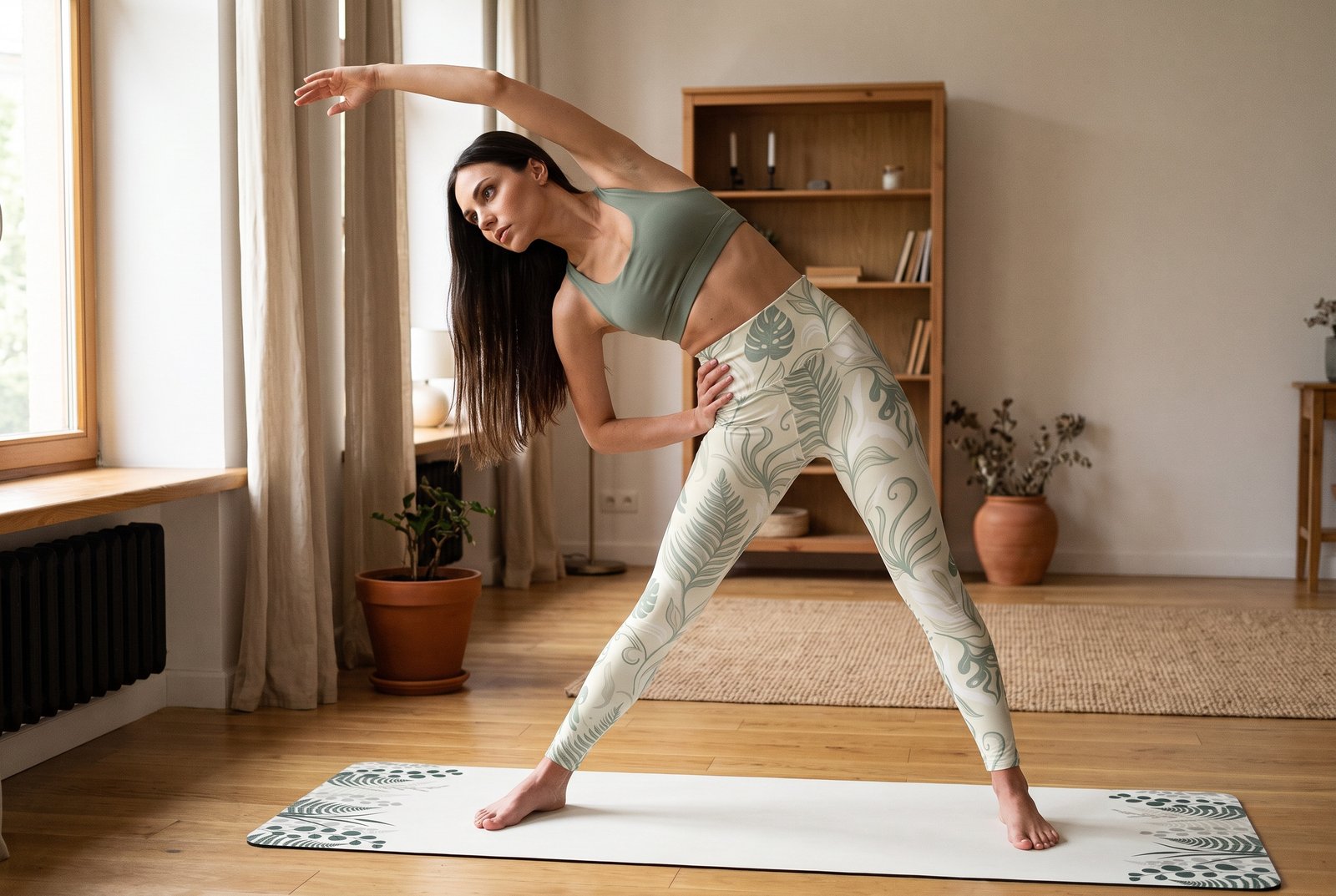
1. Standing side bend — 30 seconds each side
Feet hip-width. Reach the right arm overhead, let the left hand slide down the outside of the left thigh, and lean left without letting the ribs twist forward. This one’s for the lats, the obliques and the space between the lower ribs and the pelvis. You should feel a long stripe of stretch up the right flank. Stop if it turns into a pinch under the ribs rather than a pull.
2. Hands clasped behind, chest open — 40 seconds
Lace the fingers behind your back, straighten the elbows as much as they allow, and draw the knuckles away from your backside while lifting the breastbone. If your hands won’t meet, hold a towel or a belt between them. For the front of the shoulders and the chest, both of which shorten over a keyboard. Keep the chin level and the lower ribs down — if you feel it in the neck, you’ve shrugged.
3. Standing quad — 30 seconds each side
Left hand on the wall. Bend the right knee, catch the ankle or trouser hem with the right hand, and bring the knee to point at the floor rather than forward. Squeeze the glute on that side. For the front of the thigh and, if you get the pelvis tucked, the top of the hip flexor. If you can’t reach the foot, loop a belt around the ankle and hold the ends. Knee pain here means come out of it.
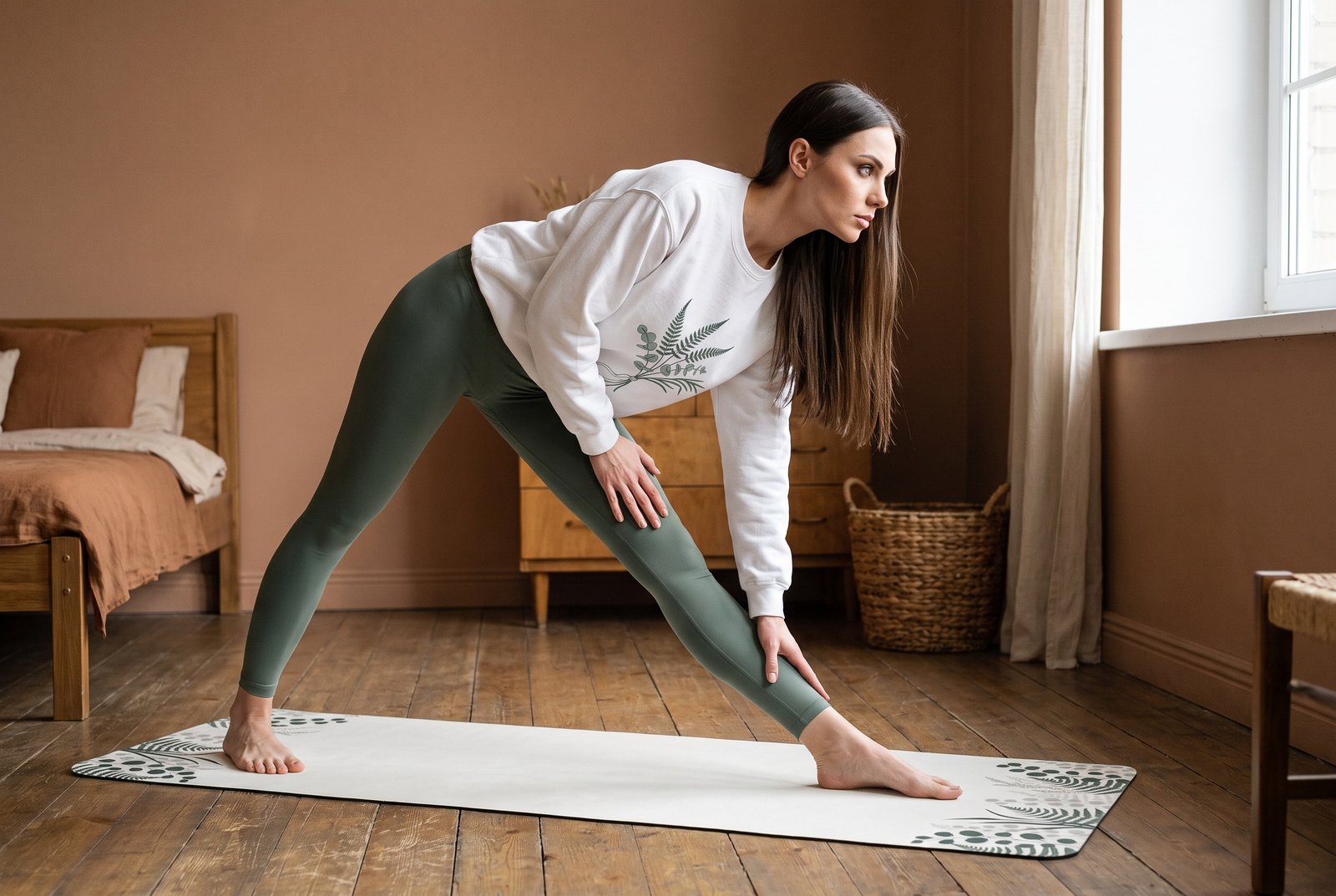
4. Staggered-stance hamstring hinge — 30 seconds each side
Right foot forward about a boot’s length, heel down, toes up if you can manage it. Hands on the front thigh or on a worktop. Push the hips straight back, keep the spine long, and hinge until the back of the right thigh objects. For the hamstrings without any of the rounding a toe-touch produces. The spine stays long and the hips travel backwards — reaching for your toes with a rounded back is a different and less useful exercise.
5. Wall calf stretch — 30 seconds each side
Hands on the wall, right leg back and straight, right heel pressed down, back toes pointing forward. For the calf and the Achilles. Then bend that back knee slightly and hold ten more seconds; that shifts the pull lower, into the soleus, which is the bit runners usually neglect. Sharp pain in the Achilles or a hot, swollen calf isn’t a stretching problem. See someone.
6. Standing hip flexor lunge — 30 seconds each side
From the same split stance, bend the front knee, tuck the tailbone under, and press the back hip gently forward. A hand on the wall for balance. For the front of the back hip — the tissue that spends all day folded at ninety degrees in a chair. You want a broad pull across the front of the hip and upper thigh, not a pinch at the front of the hip socket. If it pinches, shorten the stance.
7. Neck side bend with an anchor — 25 seconds each side
Let the right arm hang and curl the fingers slightly under, as if holding the hem of a long coat. Tip the left ear towards the left shoulder. For the upper trapezius and levator scapulae. Light pressure from the left hand on the head is optional and should add almost nothing. No pulling, no circling, and if anything tingles down the arm, stop immediately.
Stretch routine for sitting all day: the order matters
That order is deliberate. Spine and chest first, because they open quickly and make everything downstream easier. Then thigh, hamstring, calf, hip. Neck last, when the shoulders have already dropped.
Done once with no faffing, it’s about six and a half minutes of holding plus transitions, so call it eight. If you want a ten minute standing stretch routine for beginners, add a second round of the side bend, the hamstring hinge and the hip flexor, since those three carry most of the load for a sitting body.
Desk hips and desk hamstrings deserve more than one hold a day, mind. When you have floor access and more time, the longer hamstring routine for sitting all day and these hip flexor stretches for desk workers go deeper than any standing version can.
Standing running stretches: before or after?
Before a run, don’t hold. Move through the same shapes for five or six seconds each, three or four times, so the tissue warms rather than relaxes. Long static holds immediately before sprinting or hill work aren’t your friend.
After the run, hold the full counts. Calf, hamstring hinge and hip flexor are the three that matter most, and the staggered stance is easy to find on a kerb or a gatepost.
Props you already own
You need a wall. That’s genuinely it. A folded towel between the hands replaces a strap for the chest opener; a dressing gown cord or a dog lead does the same job for the quad stretch. A stack of two books under the front foot raises the hamstring hinge if your hamstrings are short.
If you end up doing this daily and want a proper strap rather than a belt that digs in, there are a few in the shop. But borrow from the laundry pile first and see whether you keep the habit.
On mornings when you do have floor and time, the five minute morning stretch routine covers ground this one can’t.
When standing stretches are the wrong answer
Dizziness when you stand or bend, pain that travels below the knee, numbness anywhere, a joint that catches or gives way, or pain that wakes you at night — none of that is a flexibility problem and none of it improves by stretching harder. That’s a conversation with a physiotherapist or your GP, and the sooner the better.
Bad day minimum: side bend, staggered hamstring hinge, standing hip flexor. Thirty seconds each side, hand on the wall, under three minutes total.
If it hurts: sharp pain, pins and needles or numbness means come out of the position now, not in ten more seconds. A dull muscular pull is the only sensation you’re looking for.
Pain that persists past a few days, travels down a limb, or comes with weakness belongs to a physiotherapist, not a routine.
General movement guidance, not medical advice. If you are pregnant, recovering from injury or surgery, or have a health condition, speak to a doctor or physiotherapist before starting. Stop if anything is sharp, numb or tingling. Photographs are AI-generated illustrations featuring Elena.


