

How we make money here: stretching.shop makes the printed pieces in this shop ourselves. Anything on this page marked Recommended gear is made by someone else and sold by a retailer, and we may earn a small commission if you buy through our link at no extra cost to you. We recommend gear we would use, and we say when a cheaper option is the better buy.
Every foam roller looks the same in a photograph and behaves completely differently on the floor. That is why people buy one, hate it, and conclude that rolling does not work for them.
There are really only two decisions: textured or plain, and short or long. Get those right and a $17 roller can outperform a $50 one for your particular problem.
Decision one: textured or plain
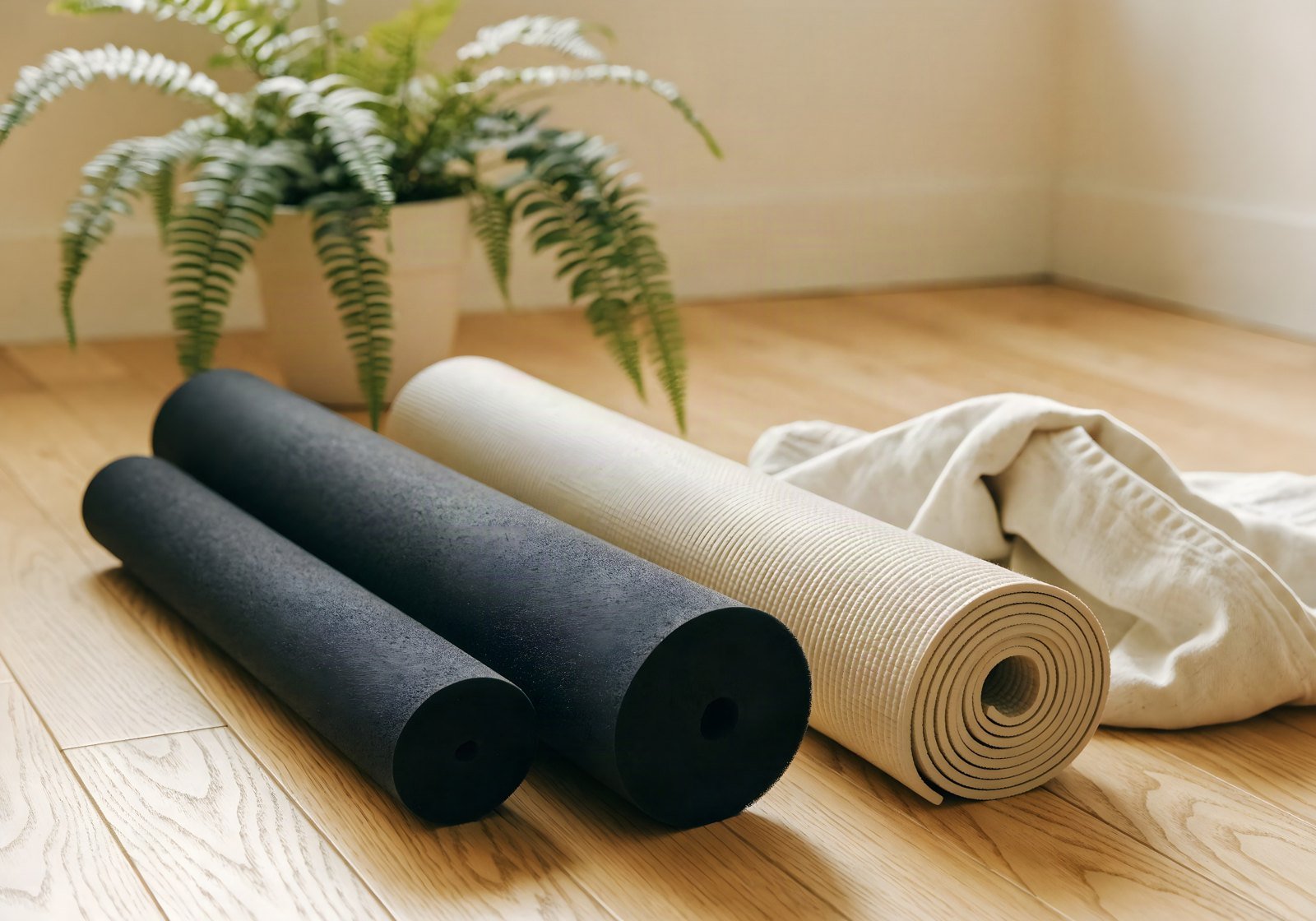
Plain high-density rollers are a solid cylinder of firm foam. One pressure, everywhere, every time. They are cheap, they last, and they are excellent at broad, even work — especially along the spine.
Textured rollers (the GRID pattern is the one everybody copies) wrap foam over a hollow rigid core and mould it into flat areas, ridges and bars. Rotate the roller and the pressure changes. That matters on a limb, where you want to start broad on a guarded muscle and get narrower as it settles.
A guarded muscle tenses more under pressure it did not expect. That single fact is why the textured roller earns its extra money on hamstrings and quads — and why it is a waste of money if all you do is lie along it to open a stiff upper back.
Decision two: 13″, 18″, 24″ or 36″
| Length | What it is for | Where it fails |
|---|---|---|
| 13″ | Hamstrings, quads, calves, glutes, IT band. Fits in a tote or a case. | Too short to lie along your spine |
| 18″ | The compromise. Limbs, and just about enough for the upper back. | Nothing badly, nothing brilliantly |
| 24″ | Spine work with room for your shoulders, plus limbs. | Bulky to travel with |
| 36″ | Lying full-length along the spine; also a support prop for restorative work. | Awkward to store, overkill for limbs |
What the market actually buys
Read on Amazon on 18 September 2026, sorted by best sellers. These are Amazon’s displayed figures, not our testing:
| Roller | Type | Rating | Ratings count | Price |
|---|---|---|---|---|
| TriggerPoint GRID 1.0, 13″ | Textured, hollow core | 4.7 / 5 (#1 Top Rated) | ~23,600 | $27.99 |
| Amazon Basics high-density, 18″ | Plain, solid | 4.5 / 5 | ~16,900 | $15.29 |
| Amazon Basics high-density, 24″ | Plain, solid | 4.6 / 5 | ~19,300 | $16.99 |
The interesting number is not the rating, it is the volume: the plain 18″ roller was showing 10,000+ bought in the past month against the GRID’s 9,000+, at roughly half the price. The market is split almost exactly down the middle, which is what you would expect when two products solve two different problems.
Which to buy, by what actually hurts
Tight hamstrings, quads or calves: the textured 13″. The ability to start broad and go narrower is the whole point, and it travels.
Stiff upper back from a desk: a plain 24″ or 36″. Lie along it, arms out, and breathe. A 13″ roller cannot do this job at any price.
One roller, mixed problems, tight budget: plain 18″. It is the least wrong answer, and it costs about $15.
Very tender legs or a first roller ever: start with the plain one against a wall, standing. Full body weight on a textured roller on day one is how people decide rolling “is not for them”.
The part nobody sells you
Rolling does not lengthen anything. What it reliably does is reduce the protective tension that stops you accessing range — which makes it a doorway to stretching, not a replacement for it. Two minutes of rolling followed by four minutes of holds beats ten minutes of rolling on its own, every time.
If you want the holds laid out properly, our 10-minute hamstring routine is built for exactly this, and Elena’s free 7-day plan spreads the same work across a week.
How to roll without wasting the session
- One inch per second. Fast rolling feels productive and does close to nothing.
- Stop on the sore spot and take three slow breaths out, instead of sawing back and forth over it.
- Ninety seconds per area is enough. This is not an endurance event.
- Roll, then stretch. In that order, always.
- Not on a hard floor. A mat under you keeps the roller from skidding and your spine from taking the impact.


